skip to main |
skip to sidebar

What would happen if, all of a sudden, all human beings disappeared from Earth, leaving our buildings and products behind? How much time would Earth need to erase our impact on the planet? With no-one to control our residues, could there be any disastrous accident? These are some of the questions that the journalist Alan Weisman approaches in The World Without Us, a popular science book in which the author talks about how houses and cities would collapse, how nature would regain concrete and asphalt, what would happen with nuclear stations and nuclear residues, or which animal species or plants would benefit or be damaged from our extinction.
Here you have some clues: our planet would need 100,000 years to restore the levels of carbon dioxide back to pre-human presence; it would take 35,000 years to cleanse the lead deposited during the smokestack era from the soil; with high-voltage lines and glass towers down, together with other dangers built by humans, every year a billion doomed birds would survive; with all draining systems in the urban subsoil no longer working, streets would soon subside, along with houses some years later… Would cities disappear without a trace? If you want answers, you’d better read the book.
Sources:
- The World Without Us: http://www.worldwithoutus.com/index2.html
- Examples from the book: http://www.worldwithoutus.com/did_you_know.html

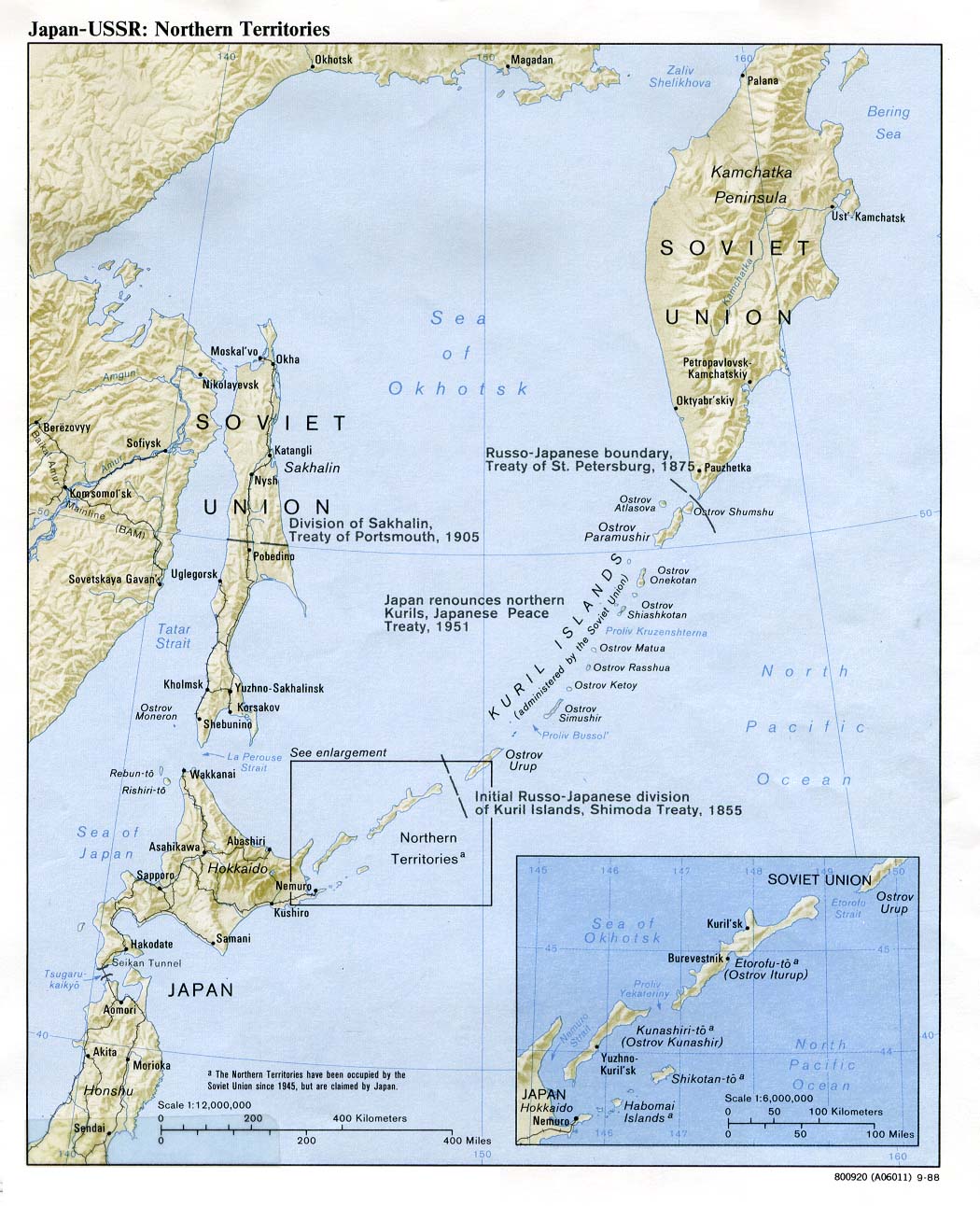
Most history books say that World War II ended on 2 September 1945, the day when Japan signed the official surrender with the Allies. Some other books say it ended on 14 August 1945, when Japan admitted their defeat, although some weeks elapsed until the formal surrender was signed. However, for the Soviet troops, war ended on 9 May 1945, the Victory Day in the Soviet Union. There are many more dates: 8 May 1945, when the Allies celebrate the Victory Day in Europe; 12 May 1945, when the last German troops surrendered in Prague; 9 September 1945, when the last Japanese troops surrendered in China… This is quite usual in wars: there is the official end of war, the day of peace treaties and the date of real end of combats, regardless of what Joint Chiefs of Staff say. Choosing one of these dates as the main day for the end of war, that is, as the date included in history books, is just a convention. However, World War II is much more complex than that: strange as it may seem, Russia and Japan have not signed a peace treaty yet. Therefore, and legally speaking, World War II is not over. That’s how the story goes: in August 1945, the Soviet troops occupied the Kuril Islands, in the north of Japan, which are currently part of Russia’s Sakhalin Oblast region. These islands were given to Japan in 1875 but, at the Yalta Conference, the US and Russia distributed world territories and decided that these islands were to be part of the Soviet Union. And then the whole thing got complicated. In 1951, Japan formally renounced to these islands in the peace treaty of San Francisco, but Russia did not sign this treaty, so five years later Japan changed its mind and now these islands are claimed by Japan, which refers to them as the Northern Territories. There have been many attempts to sign a treaty between Russia and Japan to end the legal battle for these islands, so far without success. Although the Soviet Union has disappeared, neither Yeltsin nor Putin have changed their minds and the Kuril dispute is likely to go on for a long time. Sad as it may be that two countries cannot sit together and talk to avoid a war, it is even sadder that they cannot agree to end a war.
Sources:

Governments and administrations generate and have access to large amounts of data of general interest. Some data (very few) should be kept secret for safety reasons, but most data should be public knowledge: citizens are the owners of these data, like the rest of goods managed by the administrations. However, and sadly enough, this is not the case: administrations are reluctant to share these data with the general public, or it is too difficult to make them freely available to citizens.
Now, new technologies make this disclosure process easier, as there is no excuse to prevent data from being published, thus improving the transparency of public management and ending up with secrecy. Some administrations have joined the Open Data movement, a philosophy that aims at making information public and as accessible as possible. One of these pioneering countries is the United Kingdom. In Spain, the administrations of Asturias, Basque Country and Catalonia have recently joined this movement too. These countries publish lots of data and figures about statistics, population, traffic, weather forecasts, maps… in their web sites so that they are made available and reusable to citizens or associations.
But making these data public is not enough: they should be analysed, separating the wheat from the chaff and, finally, they should be spread. We are lost in a world of data and this is only the beginning: we should find our way to assimilate so much information. With the aim to turn this disclosure into something useful, many administrations promote some competitions to create software applications to help users surf in this sea of information. A good example is Apps for Development, an initiative launched by the World Bank where competitors are challenged to develop computer programmes using this information to contribute to progress towards meeting one of the Millennium Development Goals.
Sources: - Open Data philosophy: http://en.wikipedia.org/wiki/Open_science_data
- Open Data in the United Kingdom: http://www.nationalarchives.gov.uk/news/498.htm
- Open Data in Asturias: http://www.asturias.es/portal/site/Asturias/menuitem.77b6558ac8616446e44f5310bb30a0a0/?vgnextoid=05badd42ece45210VgnVCM10000097030a0aRCRD&vgnextchannel=05badd42ece45210VgnVCM10000097030a0aRCRD&i18n.http.lang=es
- Open Data in the Basque Country: http://opendata.euskadi.net/w79-home/es
- Open Data in Catalonia: http://dadesobertes.gencat.cat/
- Open Data catalogue for world administrations:
http://www.epsiplatform.eu/psi_data_catalogues/category_1_public_sector_information_psi_data_catalogues_by_governments_direct_access_to_data
- Apps for Development, an initiative launched by the World Bank:
http://appsfordevelopment.challengepost.com/
- Millennium Goals: http://www.deliveringdata.com/2010/11/millenium-goals.html





 Posts
Posts